Beadalon Bead Stringing Wire – 7, 19 & 49 Strand Guide
Choosing the right bead stringing wire is an important part of making jewellery that looks good, hangs naturally and withstands regular use. Different beads and jewellery designs require different levels of flexibility, wire diameter and strength.
Beadalon is an established manufacturer of specialist jewellery-making wires, offering a range of flexible, multi-strand beading wires for necklaces, bracelets and other jewellery projects. In this guide, we explain the differences between Beadalon 7 Strand, 19 Strand and 49 Strand wire, along with practical tips to help you choose the most suitable option.
What Is Beadalon Bead Stringing Wire?
Beadalon bead stringing wire is made from multiple fine strands of stainless steel wire, combined into a flexible cable and coated with a protective nylon layer. It is designed for stringing beads and is commonly used for making necklaces and bracelets.
Unlike traditional beading thread, multi-strand wire offers strength and durability while remaining flexible enough for a wide variety of jewellery designs.
Two important factors influence how a beading wire performs:
- Strand count: The number of fine wires making up the cable affects its flexibility and drape.
- Wire diameter: The overall thickness of the coated wire affects its suitability for different bead holes, weights and jewellery designs.
Understanding these differences makes choosing the correct wire much easier.
Beadalon 7 Strand vs 19 Strand vs 49 Strand
Beadalon offers different strand constructions to suit a variety of jewellery-making requirements. In general, wires with more individual strands offer greater flexibility and a softer drape, although diameter and construction also affect performance.
7 Strand Beadalon Wire
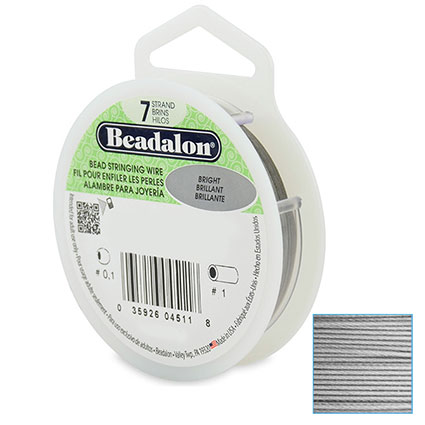
Beadalon 7 Strand wire is a practical, economical option for many straightforward bead stringing projects.
It has a firmer feel than comparable 19 Strand and 49 Strand wires, making it suitable for designs where maximum flexibility is not essential.
It can be a useful choice for simple necklaces, craft projects and jewellery designs that benefit from a slightly more structured appearance.
19 Strand Beadalon Wire
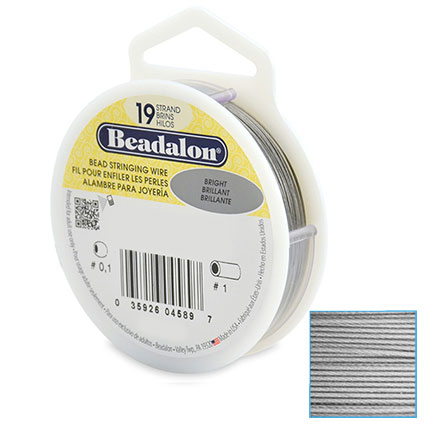
Beadalon 19 Strand wire provides a good balance between flexibility, strength and ease of use.
It is a versatile choice for a wide range of necklaces and bracelets, particularly where a smoother drape is desirable without necessarily requiring the maximum flexibility of 49 Strand wire.
For jewellery makers who are unsure which strand construction to choose, 19 Strand is often a sensible starting point.
49 Strand Beadalon Wire
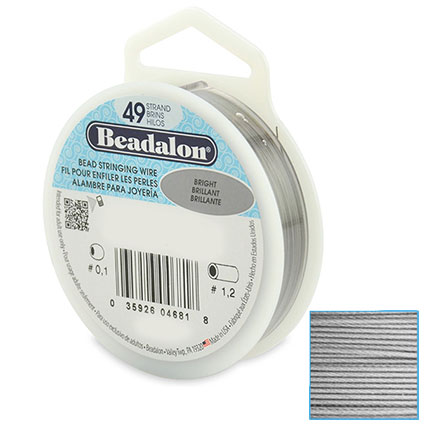
Beadalon 49 Strand wire offers the greatest flexibility of the three strand constructions when comparing equivalent wire diameters.
Its softer drape makes it particularly useful for jewellery designs that need to move naturally, including flexible necklaces and bracelets.
It is especially worth considering when working with designs where comfort, movement and flexibility are important.
Remember: A higher strand count does not automatically mean a higher breaking strength. Always check the specifications for the particular wire diameter and product you are using.
How to Choose the Right Beading Wire Diameter
As well as strand count, choosing the correct wire diameter is essential.
Beadalon wires are available in different thicknesses, allowing jewellery makers to select a wire that suits the size, weight and hole diameter of their beads.
Consider the following when selecting a diameter:
- Bead-hole size: The wire must pass comfortably through the smallest bead hole in your design.
- Bead weight: Heavier beads may require a wire with a higher rated breaking strength.
- Number of passes: Allow sufficient room if the wire needs to pass back through beads when finishing the design.
- Flexibility: Thicker wire may feel firmer, even when it has a higher strand count.
As a general guide, choose a suitable diameter that provides adequate strength while still allowing the beads to move and hang naturally. Avoid selecting wire solely on thickness without checking its breaking strength and flexibility.
Practical Tips for Using Beadalon Stringing Wire
Use the Correct Crimps
Beading wire is commonly secured using crimp beads or crimp tubes. Choose crimps that are compatible with the diameter of your wire and use suitable crimping pliers to create a secure finish.
A properly finished connection is particularly important for jewellery containing heavier beads.
Protect the Wire at Clasps
Wire guardians can help protect beading wire from rubbing against clasps and other metal components at connection points.
This is especially useful for bracelets and necklaces that experience regular movement.
Avoid Sharp Bead Edges
Some beads, particularly certain glass, crystal and gemstone beads, may have sharp or rough edges around their holes.
Repeated movement against these edges can gradually damage the protective coating and underlying wire.
Check bead holes where possible and consider suitable protective components or alternative beads if abrasion is likely to be a problem.
Allow the Beads to Move Naturally
Avoid stringing beads so tightly that the finished jewellery cannot bend comfortably.
Overly tight designs can place unnecessary stress on the wire, particularly when the jewellery curves around the neck or wrist.
Allowing appropriate movement helps the finished piece hang more naturally and reduces strain on the components.
Check Your Finished Jewellery
Before wearing or selling a finished design, inspect the crimps, clasps and wire connections. Check that the wire has not been kinked or damaged during assembly and that the finished piece moves as intended.
Where to Buy Beadalon Beading Wire in the UK
At International Craft, we supply Beadalon bead stringing wires for jewellery makers, designers and businesses looking for reliable jewellery-making materials.
Our range includes different strand constructions, diameters and finishes to suit a variety of bead stringing projects.
Explore our Beadalon bead stringing wires to compare the available options and find the most suitable wire for your next jewellery-making project.
Whether you are making a simple beaded necklace or a more flexible bracelet, choosing the correct strand count, diameter and finishing components will help you achieve a professional result.


Comments